Last Updated: December 29, 2025
Floyd Collins: The Man Who Spoke From the Darkness
In January of 1925, winter lay quietly over Kentucky. The hills were pale and still, the fields bare, the air thin and cold. Life above ground moved slowly, as it always had. But beneath the soil, beneath the limestone and sand, a man lay trapped in a place so narrow he could not turn his head, so dark that even memory seemed to fade.
His name was Floyd Collins.
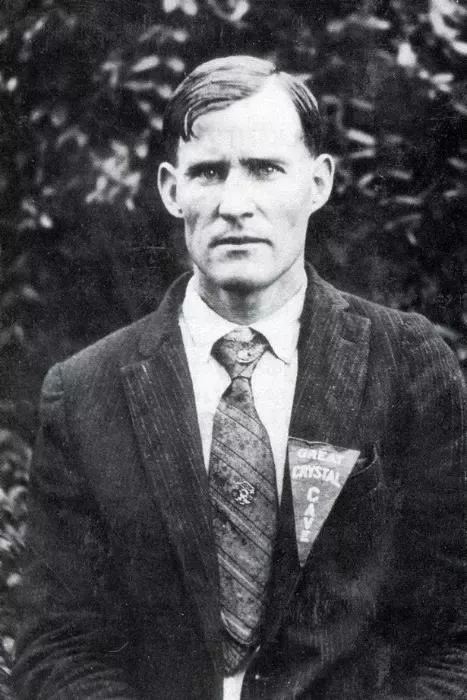
He did not set out that morning expecting to die. He carried no sense of finality with him when he stepped into the mouth of Sand Cave. To Floyd, caves were not graves. They were opportunity. They were promise. They were a future he had chased for years with scraped hands, bruised knees, and stubborn hope.
Floyd was born into a family that knew the land intimately. In Kentucky, caves were not strange or mysterious things. They were part of the geography, part of the economy, part of the local stories passed from neighbor to neighbor. Mammoth Cave had already drawn tourists from far away, and men like Floyd believed there were more wonders hidden beneath the hills. One good discovery could mean security, respect, a life lifted out of poverty.
He was not reckless, but he was determined. He explored alone because that was how caves were explored then. There were no rescue teams, no safety harnesses, no modern protocols. There was only a lantern, a rope, and faith in your own body to fit where stone allowed.
Sand Cave was narrow, unstable, and unimpressive to the casual eye. But Floyd believed it connected to larger chambers beyond. On January 30, he crawled inside, moving inch by inch through a twisting passage. The walls pressed close. Loose sand shifted under his hands. And then, without warning, the cave moved.
A rock fell.

It struck his left leg and pinned it against the stone. The pain was immediate, sharp, and blinding. Floyd tried to pull back. He tried to push forward. The passage was too tight. His body was angled downward, his head lower than his feet. He could not reach the rock. He could not free himself.
His lantern still burned. His breath echoed softly around him.
At first, he likely believed someone would come quickly. Someone always did. But hours passed. Then more hours. The cave remained silent except for his breathing and the faint sounds of the earth settling around him.
When he did not return home, people went looking. Voices eventually reached him from the entrance. Men crawled into the cave, squeezing through the same narrow passage that had betrayed him. When they found Floyd, he was alive. He spoke clearly. He asked for water. He asked how long it would take.
They told him help was coming.
Word spread faster than anyone expected. What began as a local rescue effort became a national story within days. Newspapers sent reporters. Photographers arrived. Cars lined the dirt roads leading to Sand Cave. Thousands of people gathered near the entrance, watching, waiting, talking.
Down below, Floyd could hear the activity above him. He could hear footsteps. He could hear voices arguing, planning, reporting. The sound of life carried down the narrow passages while he remained fixed in place, unable to move more than a few inches.
Rescue attempts were relentless but dangerous. Every effort to widen the passage caused more cave-ins. Sand Cave lived up to its name. The walls shifted constantly. Rocks fell. Men risked their lives crawling in and out, trying to reach Floyd without burying him alive.
Food and water were passed down at first. A microphone was lowered so reporters could capture his voice. His words appeared in newspapers across the country. People read about him at breakfast tables, in train stations, in offices. They followed his story like a serialized drama, one update at a time.
But Floyd was not a character. He was a man in pain, in darkness, growing weaker by the day.
As time passed, reaching him became harder. Cave-ins blocked access. Oxygen grew scarce. Rescuers could no longer squeeze through the passage safely. Floyd’s voice faded. At some point, it stopped entirely.
Above ground, engineers decided to dig a vertical shaft. It was a massive undertaking for the time. Men worked day and night with hand tools, lowering buckets of dirt, racing against a clock they could not see. The entire nation seemed to hold its breath as the shaft descended.
It reached Floyd too late.
When rescuers finally broke into the chamber where he lay, they found his body still pinned by the rock. His lantern was out. He had died alone in the dark, after surviving for nearly two weeks underground.
The rescue that came too late became a lesson written in stone.
Even in death, Floyd was not left in peace. His body was recovered months later, buried, then exhumed again. For a time, his remains were placed on display in a glass coffin near the cave, turned into another attraction in the very industry he had hoped to profit from. Public outrage eventually forced a proper burial, but the damage was done.
Floyd Collins became more than a man. He became a symbol.
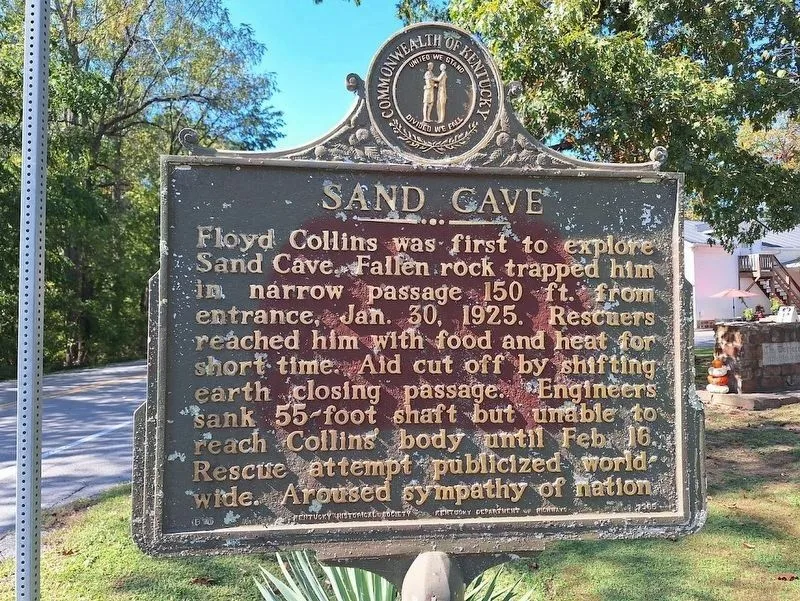
His death reshaped cave exploration. It forced the development of organized rescue techniques. It changed how journalists approached disaster reporting. It left a permanent mark on American consciousness, a reminder of what happens when ambition, technology, and humanity fail to align in time.
Today, Sand Cave is sealed. No crowds gather there. No lanterns flicker in its passages. But Floyd Collins’ story remains, whispered in discussions of ethics, survival, and the thin line between hope and inevitability.
He went into the earth chasing a future and became a warning carved into history. Not because he was careless, but because he was human.
And because sometimes, even when the whole world is watching, help still arrives too late.
Source : Official Govt Site
The Complete Beginner’s Guide to WordPress Speed Optimization in 2025