Last Updated: January 15, 2026
Introduction
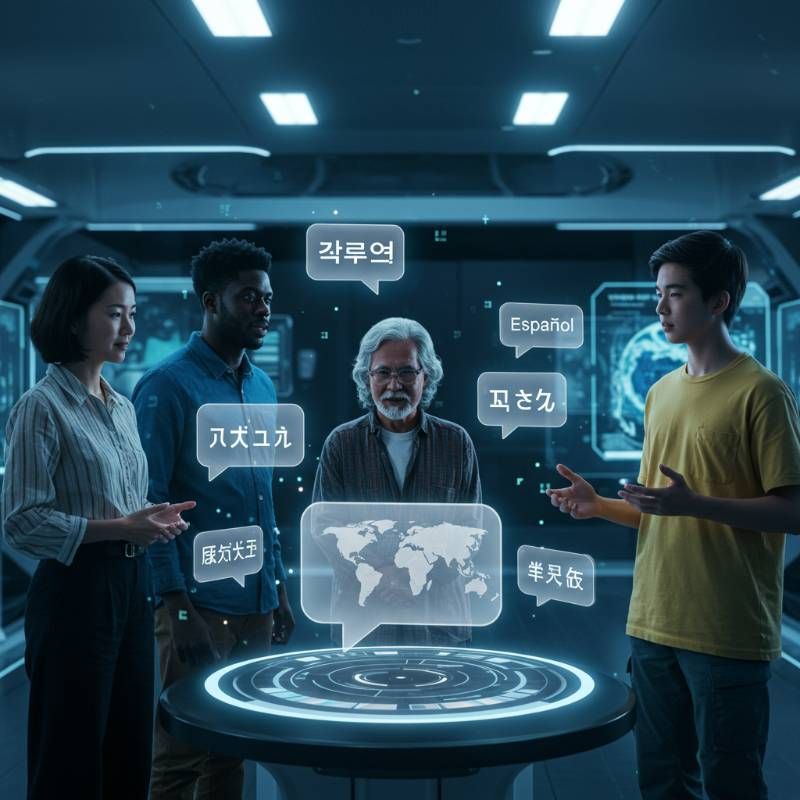
Language has always been both a bridge and a barrier in human communication. For centuries, people have struggled to connect across linguistic divides. But in 2025, artificial intelligence has achieved something once thought impossible — real-time AI translation that feels natural, instant, and accessible to everyone. Whether in business meetings, travel, or online chats, AI is finally enabling a truly multilingual world.
Let’s explore how real-time AI translation evolved, how it works, and why it’s transforming global communication forever.
🧠 1. The Evolution of AI Translation
Early translation tools like Google Translate (2006) laid the foundation, but they were far from perfect. Early systems relied on word-to-word conversion, often losing the cultural and contextual meaning.
The major shift came with Neural Machine Translation (NMT), which used deep learning to understand the context and structure of entire sentences. This allowed translations to sound more human-like and accurate.
Now, in 2025, the next generation of Large Language Models (LLMs) — like GPT, Mistral, and Llama 3 — have taken translation to the next level. They can understand tone, intent, and emotion, translating speech and text in milliseconds with remarkable fluency.
⚙️ 2. How Real-Time AI Translation Works
Today’s AI translation systems combine multiple advanced technologies:
- Speech Recognition (ASR): Converts spoken words into text instantly.
- Neural Machine Translation (NMT): Translates the text into the target language using context-aware AI models.
- Text-to-Speech (TTS): Recreates the translated text as natural human-like speech.
- Emotion & Context Detection: Adjusts tone and phrasing for cultural appropriateness.
For instance, when a Japanese speaker talks to a French listener, the AI system listens, translates, and speaks — all within seconds. These layers work seamlessly on devices, AR glasses, and even smart earbuds.
💬 3. The Power of Real-Time Communication
Imagine walking into a global conference where participants speak ten different languages — yet everyone understands each other perfectly. Or picture traveling abroad and chatting with locals as if you shared the same mother tongue.
That’s the world we’re entering. Platforms like Zoom, Microsoft Teams, and Meta Horizon Workrooms are already integrating real-time AI translation, turning global meetings into effortless multilingual experiences.
Even social media platforms are experimenting with live comment translation, enabling creators to reach a global audience instantly.
Best Free AI Tools in 2025 for Small Business in India
📱 4. AI Translation in Everyday Life
Here’s how real-time AI translation is reshaping daily life:
- Business & Remote Work: Multinational teams can collaborate seamlessly.
- Healthcare: Doctors can communicate with patients from any language background.
- Travel & Tourism: Tourists can navigate countries and cultures effortlessly.
- Education: Students access global learning resources without language barriers.
- Customer Service: Chatbots and call centers can now assist in dozens of languages simultaneously.
The human experience is becoming borderless — thanks to AI.
🧩 5. The Challenges Ahead
While the progress is extraordinary, real-time AI translation still faces challenges:
- Cultural Nuance: Language carries emotions, humor, and idioms that AI sometimes misinterprets.
- Accent & Dialect Recognition: Regional speech patterns can confuse systems.
- Data Privacy: Processing live speech raises security and privacy concerns.
- Latency: Even milliseconds of delay can affect the conversation flow.
Developers are working on solutions through contextual learning and localized training data to make AI more sensitive and accurate.
🕊️ 6. Ethical and Social Impacts
With global communication becoming effortless, the potential for cultural exchange and international cooperation is huge. However, the same technology can also spread misinformation across languages faster than ever.
That’s why companies like OpenAI, DeepMind, and Anthropic are setting ethical standards — ensuring AI translators respect privacy, transparency, and cultural diversity.
🚀 7. The Future: Real-Time AI in AR & Neural Devices
The next frontier for real-time translation lies in augmented reality (AR) and wearable devices. Imagine wearing smart glasses that show translated subtitles right in your field of view.
Companies like Google, Apple, and Meta are already testing prototypes where users can see and hear translations in real time, powered by edge AI chips that work offline.
Even more futuristic — neural translation could soon connect directly to the human brain, allowing people to understand foreign speech without hearing the translation at all.
🌐 Conclusion
The rise of real-time AI translation in 2025 marks a historic milestone. It’s more than a technological achievement — it’s a human one. For the first time, language is no longer a limitation to understanding, cooperation, or friendship.
As AI continues to evolve, it promises a world where everyone — regardless of tongue — can share ideas, emotions, and dreams freely.
The language barrier has finally begun to crumble.