Last Updated: January 20, 2026
Over the past few years, the economic relationship between the United States and China has been defined by tariffs, negotiations, and significant global tension. At the heart of this saga lies a complex trade war that has reshaped supply chains, altered global investment patterns, and influenced economic growth around the world.
In this article, we take an expert-level dive into the US-China tariffs and trade deal. We’ll explore how it started, the implications of the agreements reached, what challenges remain unresolved, and what this means for businesses, consumers, and the global economy at large.
📌 A Brief Background: How the Trade War Began
The origins of the US-China trade war trace back to 2018, when then-President Donald Trump imposed tariffs on a wide range of Chinese imports. The justification was multifaceted:
Massive trade imbalance: The U.S. consistently imported far more from China than it exported.
Intellectual property theft: U.S. companies alleged that Chinese firms often copied technology without consent.
Forced technology transfer: Companies entering the Chinese market were required to partner with local firms and share proprietary technology.
These concerns culminated in over $360 billion worth of Chinese goods being hit with tariffs, prompting retaliatory measures from China on over $110 billion worth of U.S. exports.
⚖️ The Phase One Trade Deal: A Truce, Not a Treaty
In January 2020, both nations signed the Phase One Trade Agreement. The deal included the following commitments:
🇨🇳 China Agreed To:
Purchase an additional $200 billion in U.S. goods over two years, including agricultural products, energy, and services.
Improve intellectual property protections and avoid currency manipulation.
Open markets further in sectors such as financial services and agriculture.
🇺🇸 The U.S. Agreed To:
Reduce some tariffs (such as lowering the 15% tariff on $120 billion in goods to 7.5%).
Suspend new planned tariffs.
Maintain enforcement mechanisms to ensure compliance.
However, the deal did not roll back most of the tariffs that had been placed since 2018, and it largely left structural issues—like state subsidies to Chinese companies—unaddressed.
📉 Did the Deal Work?
In practical terms, the Phase One deal had mixed results:
✅ What Went Right:
Some increases in U.S. exports to China, especially in agriculture.
Slight easing of tensions allowed for better dialogue and reduced uncertainty.
U.S. farmers benefitted from increased Chinese soybean, pork, and wheat purchases.
❌ What Fell Short:
China fell short of the $200 billion purchase target. According to the Peterson Institute for International Economics, China only met about 58% of its purchasing commitments by the end of 2021.
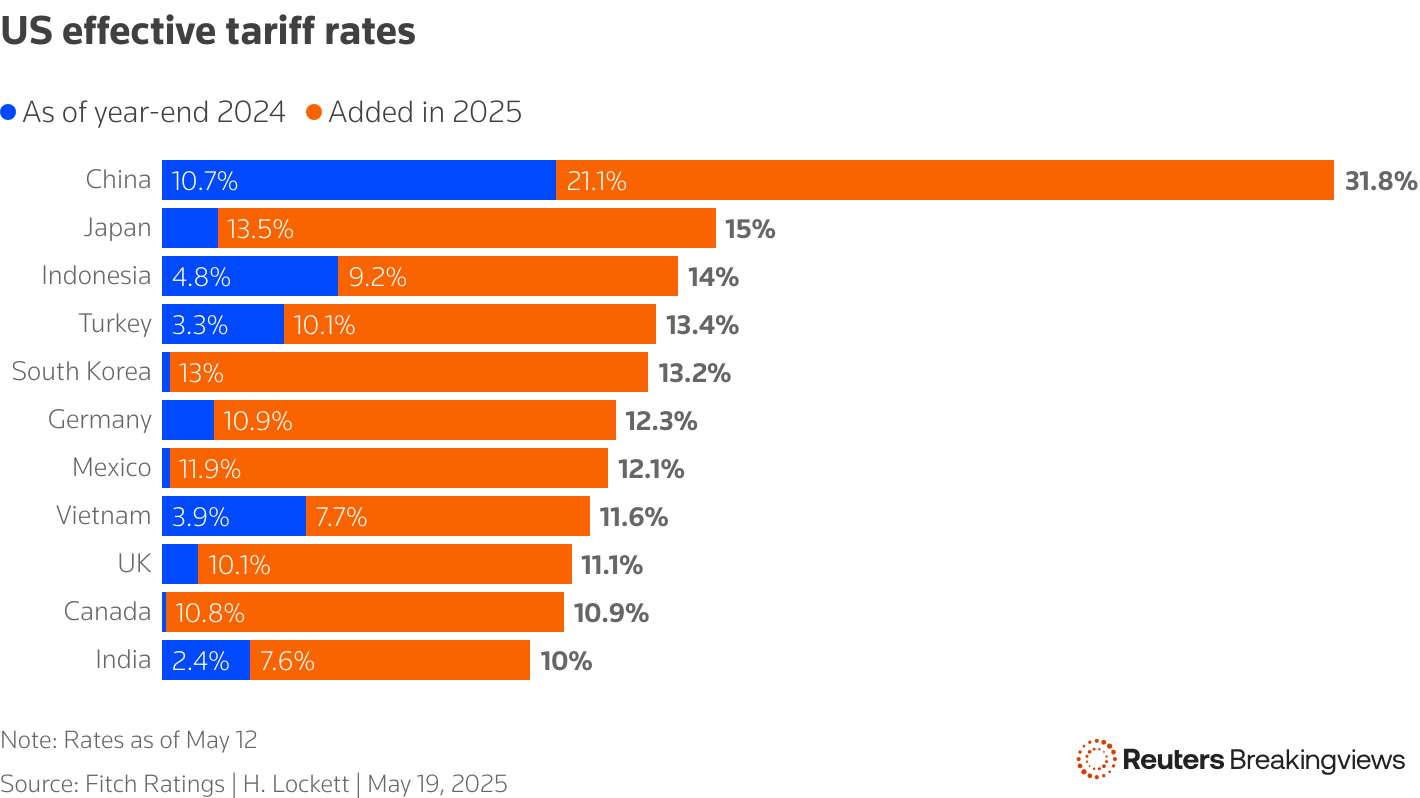
Tariffs remained high on most goods, continuing to disrupt global supply chains.
The deal didn’t address broader systemic issues like industrial subsidies or the role of Chinese state-owned enterprises.
💸 How the Tariffs Affected Businesses and Consumers
🔍 For Businesses:
Higher costs: U.S. companies reliant on Chinese manufacturing faced increased input costs.
Supply chain disruptions: Businesses started “de-risking” by shifting supply chains to Vietnam, India, and Mexico.
Uncertainty: Constant trade tensions made long-term strategic planning more difficult.
👨👩👧👦 For Consumers:
A study from the Federal Reserve Bank showed that U.S. consumers bore most of the costs of tariffs through higher prices on goods.
Delays and shortages became more common during the pandemic as well, which amplified the pain caused by tariffs on certain products like electronics, clothing, and home appliances.
🌐 Global Economic Impact
The US-China trade war didn’t just affect the two largest economies—it had ripple effects worldwide:
Exporters in third countries like Brazil, Australia, and Canada found new opportunities as China sought alternative suppliers.
Global growth slowed during the peak years of the trade war, with institutions like the IMF and World Bank citing tariffs as major drags on global GDP.
Currency volatility increased in Asia, and emerging markets with close ties to China saw capital outflows.
🔮 What’s Next in US-China Trade Relations?
As of 2025, the Biden administration has maintained many of the Trump-era tariffs, though it has approached the issue more diplomatically. Efforts to “decouple” from China—especially in sensitive sectors like semiconductors and green energy—have intensified.
There are several scenarios that could shape the next phase of this economic saga:
Selective Tariff Rollbacks: In exchange for environmental or security-related cooperation.
Sectoral Agreements: Focusing on tech, finance, or pharmaceuticals.
Continued Strategic Rivalry: With both countries building parallel systems in key industries.
📈 Takeaways for Businesses and Policy Makers
Diversify supply chains: Businesses should not rely too heavily on any one country.
Stay informed on regulatory changes: Tariff policies can change quickly with geopolitical events.
Advocate for multilateral frameworks: Trade wars often cause more harm than benefit; global cooperation may be a better solution.
- China’s Wholesale companies expose Big US companies
📝 Final Thoughts
The US-China tariffs and trade deal represent one of the most significant economic events of the 21st century. While some relief came through the Phase One agreement, most underlying issues remain unresolved. The trade war served as a wake-up call, signaling that globalization is entering a more fragmented, competitive, and politically charged era.
For investors, policymakers, and everyday citizens, staying informed and adaptive is more critical than ever.
Read More – Top 10 Must-Have Tech Gadgets of 2025: Elevate Your Lifestyle Today!